2/19/2016
Practice with the dynamometer
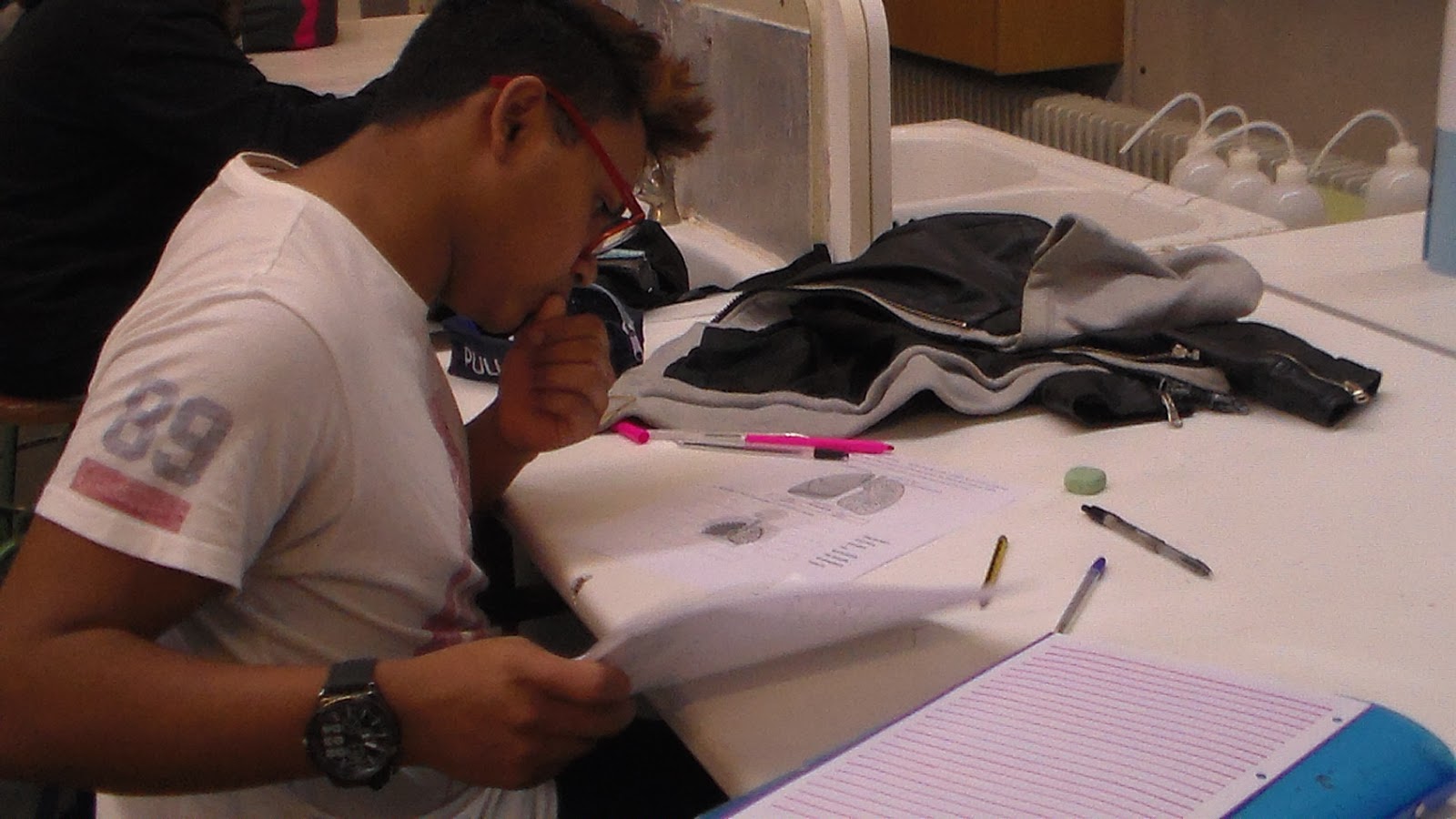
Today we have been working on a lab practice with dynamometers to compare the concepts of mass and weight.
Did you know that dynamometers follow Hooke's law? This law says that the extension of a spring is proportional to the load applied to it.
The length of a spring always changes by the same amount when it is pushed or pulled. The equation for that is:
F = k·x
where
F is how much (push or pull) is on the spring
k is a constant, the stiffness of the spring.
x is how far the spring was pushed or pulled
When x = 0, the spring is at the equilibrium position.
2/11/2016
Cardiorespiratory System
Today we
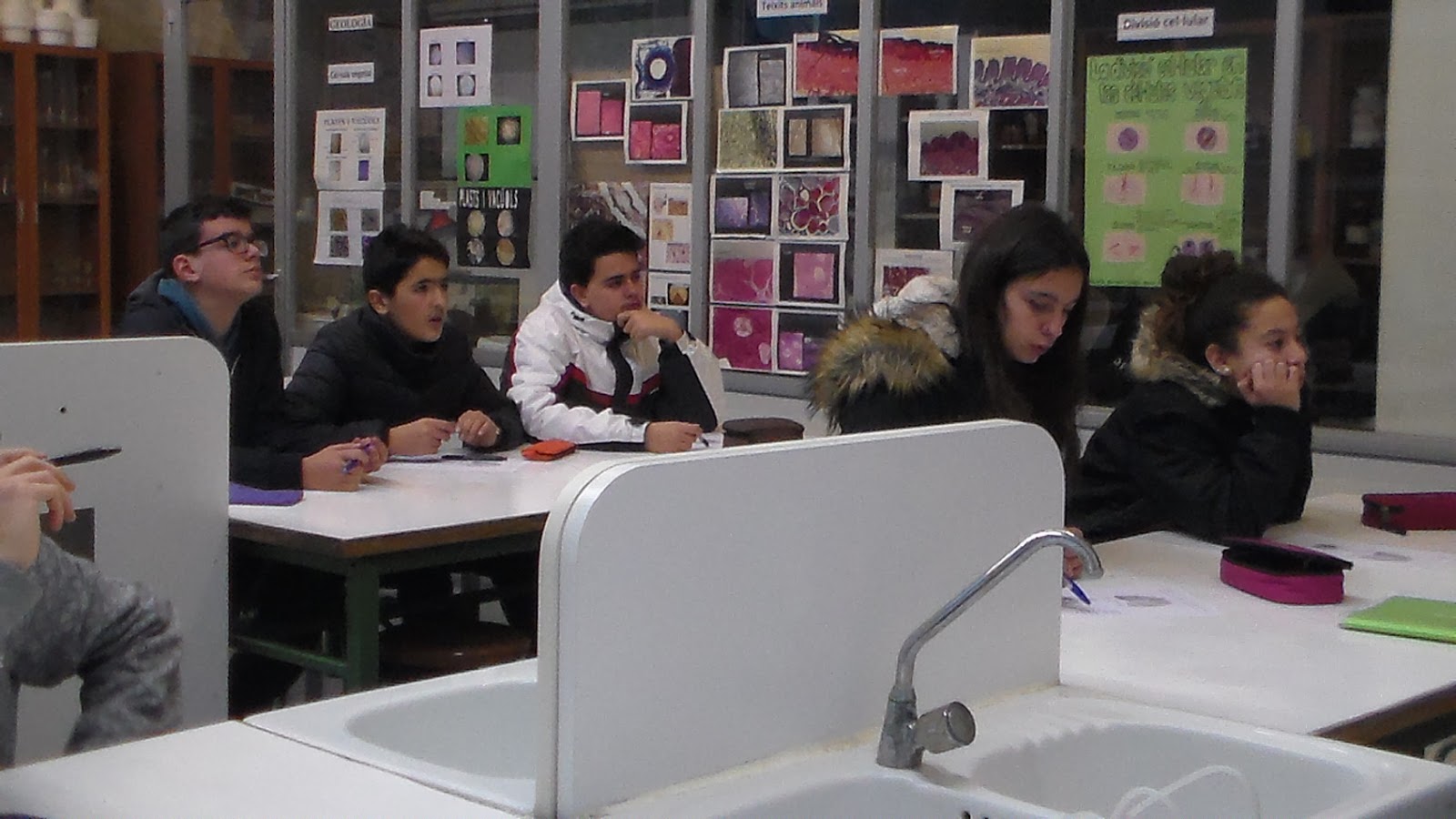
have worked on two activities related to the circulatory and respiratory
systems.
The first
activity was a betting game in which students identified a set of true or
false statements. The bets have been very lively and some groups have achieved
good profits.
In the
second activity we have played cooperatively completing statements. This is
what is known as a question loop.
Very fun and profitable!
Labels:
Biology & Geology
Location:
Igualada, Barcelona, Espanya
2/10/2016
Forces reading
Today we have been working with a reading to check some concepts about forces.
Did you know that our concept of weight is relative (we can weight less in the moon, for example), but our mass is always invariable?
2/04/2016
Introduction to the respiratory system
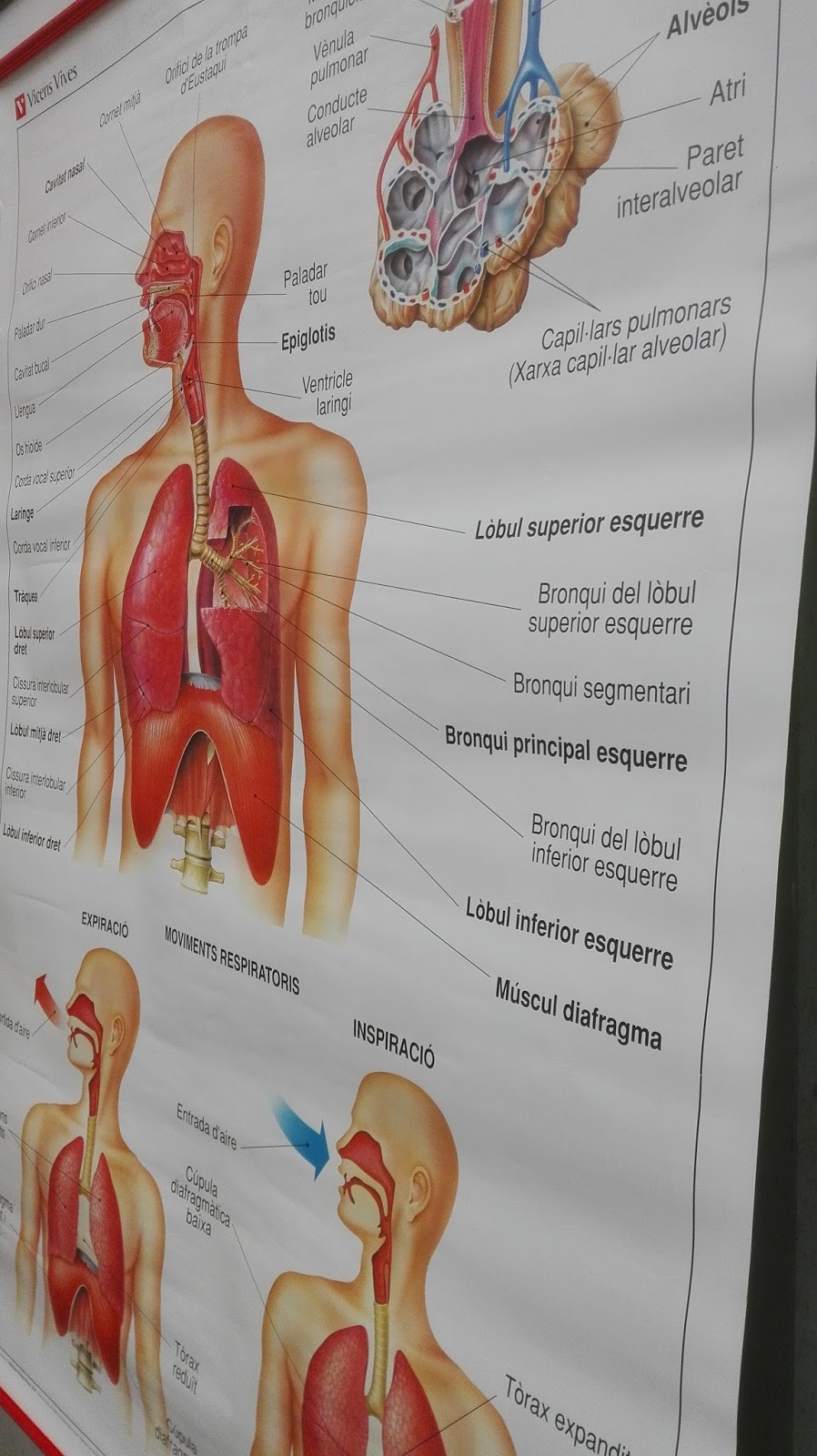
Today we have introduced new content which involves the respiratory system. We have been understood how it works and identified its parts.
Did you know that the trachea is algo called windpipe? Also, the larynx can be called voice box.
2/02/2016
Oral Presentations
Work topics related with the Circulatory system
Today we have been implementing the oral presentations about the
circulatory system.
Students were divided into four working groups of four students per team.
During some class sessions, students selected the images and the contents
and designed a poster and/or PowerPoint presentation.
A group made their oral presentation talking about the components of blood and
their functions. They also talked
about some diseases related to blood, such as anemia or thrombosis.
Other student groups explained aspects related to both the heart and the
blood vessels. They also talked about some of the most common diseases directly
related to the heart or the arteries and veins of the body, such as tachycardia,
arteriosclerosis or embolisms.
Finally, to end this series of oral presentations, two groups of students
completed this review of the circulatory system with some interesting
explanations about the circulation of blood. Of special interest was the
clarification that the blood carries out its functions in our body through two
different circuits, the pulmonary circuit and the systemic circuit.
Labels:
Biology & Geology
Location:
Igualada, Barcelona, Espanya
1/28/2016
Lab practice - Dissection of a heart
Today we have continued with the dissection of the heart in order to find out similarities and differences between the right and left ventricle, the right and left atrium and the aortic and pulmonic valves.
Labels:
Biology & Geology
Location:
Igualada, Barcelona, España
1/27/2016
Working on the recognition of lab instruments
Today we have been playing a game to search for specific lab instruments at the lab.
Did you know that volumetric pippetes are more accurate than graduated pippetes?
Subscribe to:
Posts (Atom)